SIGN GRAPHIC IMAGING 2010, A HARVEST OF DIGITAL OUTDOOR TECHNOLOGY.
International Expo Consults, a global digital advertising exhibition consultancy firm last month in Dubai held the 12th Annual Sign and Graphic Imaging Middle East at Dubai Airport Expo centre, between the 25th to 27th January 2010.
Sign and Graphic Imaging Middle East exhibition now in its 12th year, is a specialized event dedicated to the Middle East’s signage, outdoor media, screen and digital printing industries. It’s the largest and the longest running show in the region which attracted both exhibitors and visitors from across the UAE, Egypt, Lebanon, Iran, Iraq, India, Pakistan, East and West Africa etc.
The epoch making event offered the perfect ambience to enhance global brands with the needed strong platform for promoting organizational values and image amongst a large number echelons from the Signage, Graphic Imaging, and Screen and Digital Printing Industries.
This year, greater international exposure was experienced 216 exhibitors from 22 countries including Nigeria showcased their offerings, spread across an area of 16,944 square metres with global companies constituting 73.14% of the total number of exhibitors. While the local exhibitors lie at 26.85% that from emerging economies such as India and China who claimed a staggering 43.05% of the exhibitor portfolio, with the presence of more than 100 companies.
The interest and participation from Nigerian from Nigerian Outdoor Advertising companies was tremendous as the companies like Media link, Afro Media, Graphic Projects, Charella, Outreach Communications, Opportunity-to See Limited, Clearedge, Luzomedia, Inventmedia, Corpavent, Spec Digital Prints limited, Nigerian Advertising Services and Standout amongst a long list were present at the just concluded exhibition.
According to the Nigerian Facilitator, Managing Director, Graphic Projects, Chief Emeka Okezie, the Middle East Sign Graphic Imaging exhibition is a professional exhibition, aimed at facilitating trade activities and cultural communication for the industries of Outdoor advertising, imaging and signage, thus showcasing the latest in digital signage, architectural hardware, banners and posters, photo imaging and printing, large format printing, sign substrates, graphics industry services and more through various media partners, practioners and outdoor agencies all over the world. The exhibition is a platform of marketing information and research services.
Amongst dignitaries at the twelfth edition of the Sign and Graphic Imaging Middle East, His Royal Highness Sheikh Hasher Bin Maktoum, Director General of Dubai Information department.
Dubai with its US$ 100 billion retail market and its emerging retail trends known for its unique perpetual growth rate during this exclusive trade show offered international tremendous opportunities across all segments of the signage, digital, retail and advertising industries.
Thursday, February 25, 2010


KOKORO’S DREAM FULFILLED AS FASHOLA IMMORTALISES BLIND MINISTREL
Adedayo Adejobi
The Governor of Lagos state, Babatunde Raji Fashola today through a corporate Social Responsibility immortalized and brought to life the memory of the late legendary bitinerant tambourine-playing minstrel,Pa Benjamin Aderounmu better known as ‘‘Kokoro’’. The Public presentation and launch of a re-produced audio-visual collection of songs titled Igi Araba by yesterday brought to life Pa Benjamin’s unfulfilled dream which was to release an album.
The Lagos state governor, Babtunde Fashola, who was represented by the Commisioner for Home Affairs and Culture, Honourable Tunde Balogun called Kokoro a “national cultural treasure of inestimable value to the state”, that “his never say-die spirit has been a source of inspiration”, and that it was in the interest of the state government to recognize and celebrate him while alive, because “it is in celebrating you that we are celebrating ourselves.”
In the words of Governor Fashola, ‘‘In tandem with the philosophy of this administration of encouraging public Private Partnership (PPP), we have joined Keem Communications in this laudable initiative to present and launch the compilation works of ‘‘Kokoro-IGI ARABA’’for the listening public, lovers of good music, the younger generations, upcoming ones, old fans of the musician I would call ‘‘the old schools’’ and indeed for posterity.
According to Fashola, ‘‘Kokoro’’, though blind, he was a man who contributed in no mean way to the promotion of Yoruba culture and tradition. ‘‘A man who refused to be limited by life’s adversity and proved through his talent that disability was not synonymous with inability, deserves to be remembered and celebrated.’’ He said
The event which took place at the Shell Hall, Muson Centre, Onikan, Lagos was chaired by Oba Akiolu of Lagos while Chief Kessington Adebutu served as Father of the day and Chief Launcher respectively. Other notable dignitaries who graced the occasion were Erelu Dosunmu, Bisade Ologunde (Lagbaja), Pa Chris Ajilo and Dele Abiodun.
According to the organiser of the event, Keem Communications Limited, Mr Yomi Opakunle disclosed that a certain percentage of the proceeds of the launch will go to the family of the deceased minstrel while another will be donated to some charity homes in Kokoro's name.
Among highlights of the colourful epoch making event were recognition and presentation of award plaques to Asiwaju Bola Ahmed Tinubu as the‘‘Grand Pillar of Soccour’’, with Governor Babatunde Fashola being honoured with the award ‘‘Pillar of Soccour’’ while Bisade Ologunde popularly known as Lagbaja bagged the award ‘‘Pillar of Soccour’’ respectively.
Barely a month before celebrating his 84th birthday which would have come up on 25th February 2009, Pa Benjamin Aderonmu, popularly named ‘KOKORO’ and also known in recent times until early 2008 as “The Homeless Blind Minstrel” died at the age of 83.
family in Owo (his father was a prince), a town in the western region of Nigeria, Kokoro passed on to glory on Sunday 25th January in Lagos. He was survived by his wife, Caroline, and two children.
The Governor of Lagos state, Babatunde Raji Fashola today through a corporate Social Responsibility immortalized and brought to life the memory of the late legendary bitinerant tambourine-playing minstrel,Pa Benjamin Aderounmu better known as ‘‘Kokoro’’. The Public presentation and launch of a re-produced audio-visual collection of songs titled Igi Araba by yesterday brought to life Pa Benjamin’s unfulfilled dream which was to release an album.
The Lagos state governor, Babtunde Fashola, who was represented by the Commisioner for Home Affairs and Culture, Honourable Tunde Balogun called Kokoro a “national cultural treasure of inestimable value to the state”, that “his never say-die spirit has been a source of inspiration”, and that it was in the interest of the state government to recognize and celebrate him while alive, because “it is in celebrating you that we are celebrating ourselves.”
In the words of Governor Fashola, ‘‘In tandem with the philosophy of this administration of encouraging public Private Partnership (PPP), we have joined Keem Communications in this laudable initiative to present and launch the compilation works of ‘‘Kokoro-IGI ARABA’’for the listening public, lovers of good music, the younger generations, upcoming ones, old fans of the musician I would call ‘‘the old schools’’ and indeed for posterity.
According to Fashola, ‘‘Kokoro’’, though blind, he was a man who contributed in no mean way to the promotion of Yoruba culture and tradition. ‘‘A man who refused to be limited by life’s adversity and proved through his talent that disability was not synonymous with inability, deserves to be remembered and celebrated.’’ He said
The event which took place at the Shell Hall, Muson Centre, Onikan, Lagos was chaired by Oba Akiolu of Lagos while Chief Kessington Adebutu served as Father of the day and Chief Launcher respectively. Other notable dignitaries who graced the occasion were Erelu Dosunmu, Bisade Ologunde (Lagbaja), Pa Chris Ajilo and Dele Abiodun.
According to the organiser of the event, Keem Communications Limited, Mr Yomi Opakunle disclosed that a certain percentage of the proceeds of the launch will go to the family of the deceased minstrel while another will be donated to some charity homes in Kokoro's name.
Among highlights of the colourful epoch making event were recognition and presentation of award plaques to Asiwaju Bola Ahmed Tinubu as the‘‘Grand Pillar of Soccour’’, with Governor Babatunde Fashola being honoured with the award ‘‘Pillar of Soccour’’ while Bisade Ologunde popularly known as Lagbaja bagged the award ‘‘Pillar of Soccour’’ respectively.
Barely a month before celebrating his 84th birthday which would have come up on 25th February 2009, Pa Benjamin Aderonmu, popularly named ‘KOKORO’ and also known in recent times until early 2008 as “The Homeless Blind Minstrel” died at the age of 83.
family in Owo (his father was a prince), a town in the western region of Nigeria, Kokoro passed on to glory on Sunday 25th January in Lagos. He was survived by his wife, Caroline, and two children.
Thursday, January 21, 2010
Contra-Bassist Bright comes alive with Rhythm and Grooves.
Contra-Bassist Bright comes alive with Rhythm and Grooves.
Adedayo Adejobi
Bright Gain is one name that does not readily ring a bell in the circular world, but jazz enthusiasts would really attest to his nimble fingers, fast paced sound and dexterity on the bass guitar
Mentioning and acknowledging relevant and notable names of highly revered, though now internationally relocated and recognized Jazz Instrumentalists, profiles of people like Fela’s lead saxophonist, Seyi clegg, renowned pianist and producer Sola Raji formerly with Jazz Diva, Yinka Davies, Texas based Pianist and internationally acclaimed producer Dapo Torimiro of the now defunct KUSH group, Wole Oni, Nigeria’s first contemporary jazz drummer, Ray Jehovy, Jazz guitarist and Agboola Shadare amongst a very competitive few readily come to mind. . Nigeria’s fastest most experienced and widely read Contra-bassit whose name readily matches the above list and still stands very relevant in Nigeria’s present jazz history is a jazz lover’s delight.
Since arriving Lagos in 1995, Lagos based Nigeria’s best Bass player, jazz composer and promoter Bright Gain has been a force to be reckoned with. Born Sagbamah Bright Gain in 1973, Bright Gain has performed and recorded with numerous Artiste such as international flutist and philharmonic composer, Tee Mac Omatsola Iseli, Jazz Vocalist and composer ,Yinka Davies, French pianist, Manuk Hanchadrurian, Greek guitarist Sotiris Papadopoulos, e.t.c. As a jazz promoter, Bright Gain has organized different classic jazz programs attended by very important dignitaries like ”Jazzmind Jazz Fest" at the Muson Center in 2004, ”Jazify the Lord with Bright Gain “a quarterly jazz program. An award winning Jazz Artiste CMA Jazz Artiste of the year 2006.
Bright who plays the bass, a lead, melody playing instrument with dexterity is influenced stylistically by various samples of Smooth jazz, contemporary jazz R&B, funk and pop has had great success balancing the artistic with the commercial especially in Nigeria where jazz appreciation was terrible, though fast emerging and spreading quickly now as the genre is witnessing the much needed patronage it so deserves.
Sagbamah, Nigeria’s most revered fastest and most experienced jazz bass player, a master of the hollow body instrument in a recently concluded Muson concert Jazz Festival performed slow tempo ballads and walking basslines with three fingers while he used the more nimble tips of the fingers to play fast-moving solo passages and pluck lightly for quiet tunes. He seems to have mastered the use of amplifications as he could accentuate and de- accentuates certain bass frequencies responsiveness such that there was less finger noise.
Bright Gain, whose use of the technique was often highly syncopated and virtuosic, sometimes interpolated two, three, four, or more slaps in between notes of the bass line. He played rapid, syncopated and rhythmic bass lines in coordination with the drummer who played heavy groove. In his song titled ‘‘Lily’s Song’’, the bass guitarist played a more lengthy expansive and improvised solo role with a few short bass breaks during the concert. Also while performing other songs he made regular use of the upper notes of the chord, 9ths 11ths 13ths. The semitone approach to the chord note from above in addition to the lead from below. This, of course, led to chromatic chord movements in the harmonies, complicating the sequence but supplying smooth forward momentum appealing to the hear and the discerning mind. The phrasing was 'jagged' and 'angular' and full of fast triplets and sixteenths, the melodic line was spiced with unexpected accents.
Bright who plays the original customized modern six strings 24 frets Fender bass plays same with a distinct sound because the string buzzes against the wood and is somewhat muted because the sounding portion of the string is in direct contact with the flesh of the player's finger.
The bass allows players to use the expressive devices of glissando, vibrato and microtonal intonations such as quarter tones and just intonation in performances, according to the type of material he’s performing.
Looking through Gain’s previous work, there seems to be a process of coming to terms, a personal journey. In evidence, given the stylings of his previous albums, Stranger On The Sofa (2006) seems, in comparison, even given it’s moments of introspection, more documentary, more detached and lighter in it’s tone.
Yeah, I think I’ve sort of settled a few of my demons... wrestling with demons. I think I decided to take them out for a drink. Therefore I’m a lucky lad, I think, because you don’t really get the chance to do that kind of work in music. I think that’s saved for other areas of art, like abstract painting. People go like “That’s a guy with issues” and then they go off. But I made this the genre I wanted to work in and I was able to put things out that for me meant a certain coming to terms with and a certain putting things to sleep. I think Stranger is the beginning of a kind of work that, still, with an ironic eye, I hope, warms to the world.
Most jazz bassists specialize in either the double bass or the electric bass; in some cases, though, performers achieve a high level of virtuosity on both instruments, But for Sagbama Bright Gain whether accompanying or soloing, or playing on a double bass or an electric bass he usually aims to create a rhythmic drive and "time feel" that creates a sense of "swing" and "groove".
Because an unamplified double bass is generally the quietest instrument in a jazz band, many players like Bright as he is popularly called in the Jazz circle use the traditional slap style, a vigorous playing technique which involves slapping and pulling the strings so that they make a rhythmic "slap" sound against the fingerboard between the main notes of the bassline producing a snare drum-like percussive sound. The slap style cuts through the sound of a band better than simply plucking the strings, and allows the bass to be more easily heard, thus creating a stronger and solid tone.
Also speaking on the public perception on Nigerians towards jazz’ although many jazz listeners group smooth and contemporary jazz together, the genres are slightly different. Smooth jazz is generally considered background music played in bars in order to create an enticing late-night, non-alcoholic social atmosphere where conversation is encouraged. Whereas "straight-ahead" contemporary jazz is seen as demanding the listener's undivided attention.’’ Sagbamah said.
Sabgamah blames the decline in popularity of the smooth jazz format on a variety of factors, including lack of compelling new music, over-reliance on instrumental cover versions of pop songs similar to the mostly patronised reports showing lower ratings returns for smooth jazz stations than the traditional diary system had. Lack of revenue and the genre not being viable during the current economic crisis have also been cited as reasons. Sagbamah,a purist of the format also feels that the smooth jazz interpretation has strayed too far from its roots in contemporary jazz and new age music by over-relying on soft urban vocals, with R&B artists such as Beyonce Knowles and Aretha Franklin now staples of many smooth-jazz playlists.
Though the jazz genre is less common in Nigeria, possibly due to a relative lack of high profile mainstream jazz artists, while he also said new and innovative jazz musical works released by Nigerian jazz players has largely failed to gain airplay. He also noted that jazz until now did lack funding while other genres receive sponsorship.
Bass playing for Bright goes beyond hitting the notes, but he defines same by the instrumental approach to the voice, where he ‘‘the singer’’ matches the instruments in their stylistic approach to the lyrics, improvised or otherwise, or through scat singing. This according to bright the use of nonsensical meaningless non-morphemic syllables to imitate the sound of instruments. ‘’I don't feel like I'm singing, I feel like I'm playing the bass’’. He noted.
Compared to other great jazz players who scat- sing, Sagbama has an expansive vocal range that can hit any octave. Where Sagbama's genius lay, however, was his impeccable timing, nuanced phrasing, and emotional immediacy, qualities admired by myriad jazz lovers.
Being a producer- making a remarkable album that proceeded to win him an award for making the “ Jazz Record Of The Year”2006, probably attributable to the close relationship between his singing style and his bass playing- melodic and chromatically fluent, with a touch of blues influence, the emphasis on sensuous, soft vocal lines. which stand to date as significant developments in the field of fusion jazz in Nigeria. Bright’s approach to Vocal Jazz included Latin Jazz, using a ‘percussive’ element in his work. Gain has the remarkable ability to turn concerts into large-scale ‘workshops’, where the audience plays an integral role.
Describing his music, Bright says “I really like when people kick up their heels and go crazy.”
Bright who leads his jazz band comprising of Pianist Ini Ukoh and drummer John Osadolor combine Jazz, Rhythm and blues, gospel and soul arrangements, thus setting the standard for contemporary jazz contemporary groups in Nigeria. He also focuses on more ‘percussive’ elements in their music, going as far as to create ‘vocally produced bluesy vibrato instrumental jazz’ on a whim.
Sagbama, who, aside from performing, give jazz clinics at schools and universities.
Adedayo Adejobi
Bright Gain is one name that does not readily ring a bell in the circular world, but jazz enthusiasts would really attest to his nimble fingers, fast paced sound and dexterity on the bass guitar
Mentioning and acknowledging relevant and notable names of highly revered, though now internationally relocated and recognized Jazz Instrumentalists, profiles of people like Fela’s lead saxophonist, Seyi clegg, renowned pianist and producer Sola Raji formerly with Jazz Diva, Yinka Davies, Texas based Pianist and internationally acclaimed producer Dapo Torimiro of the now defunct KUSH group, Wole Oni, Nigeria’s first contemporary jazz drummer, Ray Jehovy, Jazz guitarist and Agboola Shadare amongst a very competitive few readily come to mind. . Nigeria’s fastest most experienced and widely read Contra-bassit whose name readily matches the above list and still stands very relevant in Nigeria’s present jazz history is a jazz lover’s delight.
Since arriving Lagos in 1995, Lagos based Nigeria’s best Bass player, jazz composer and promoter Bright Gain has been a force to be reckoned with. Born Sagbamah Bright Gain in 1973, Bright Gain has performed and recorded with numerous Artiste such as international flutist and philharmonic composer, Tee Mac Omatsola Iseli, Jazz Vocalist and composer ,Yinka Davies, French pianist, Manuk Hanchadrurian, Greek guitarist Sotiris Papadopoulos, e.t.c. As a jazz promoter, Bright Gain has organized different classic jazz programs attended by very important dignitaries like ”Jazzmind Jazz Fest" at the Muson Center in 2004, ”Jazify the Lord with Bright Gain “a quarterly jazz program. An award winning Jazz Artiste CMA Jazz Artiste of the year 2006.
Bright who plays the bass, a lead, melody playing instrument with dexterity is influenced stylistically by various samples of Smooth jazz, contemporary jazz R&B, funk and pop has had great success balancing the artistic with the commercial especially in Nigeria where jazz appreciation was terrible, though fast emerging and spreading quickly now as the genre is witnessing the much needed patronage it so deserves.
Sagbamah, Nigeria’s most revered fastest and most experienced jazz bass player, a master of the hollow body instrument in a recently concluded Muson concert Jazz Festival performed slow tempo ballads and walking basslines with three fingers while he used the more nimble tips of the fingers to play fast-moving solo passages and pluck lightly for quiet tunes. He seems to have mastered the use of amplifications as he could accentuate and de- accentuates certain bass frequencies responsiveness such that there was less finger noise.
Bright Gain, whose use of the technique was often highly syncopated and virtuosic, sometimes interpolated two, three, four, or more slaps in between notes of the bass line. He played rapid, syncopated and rhythmic bass lines in coordination with the drummer who played heavy groove. In his song titled ‘‘Lily’s Song’’, the bass guitarist played a more lengthy expansive and improvised solo role with a few short bass breaks during the concert. Also while performing other songs he made regular use of the upper notes of the chord, 9ths 11ths 13ths. The semitone approach to the chord note from above in addition to the lead from below. This, of course, led to chromatic chord movements in the harmonies, complicating the sequence but supplying smooth forward momentum appealing to the hear and the discerning mind. The phrasing was 'jagged' and 'angular' and full of fast triplets and sixteenths, the melodic line was spiced with unexpected accents.
Bright who plays the original customized modern six strings 24 frets Fender bass plays same with a distinct sound because the string buzzes against the wood and is somewhat muted because the sounding portion of the string is in direct contact with the flesh of the player's finger.
The bass allows players to use the expressive devices of glissando, vibrato and microtonal intonations such as quarter tones and just intonation in performances, according to the type of material he’s performing.
Looking through Gain’s previous work, there seems to be a process of coming to terms, a personal journey. In evidence, given the stylings of his previous albums, Stranger On The Sofa (2006) seems, in comparison, even given it’s moments of introspection, more documentary, more detached and lighter in it’s tone.
Yeah, I think I’ve sort of settled a few of my demons... wrestling with demons. I think I decided to take them out for a drink. Therefore I’m a lucky lad, I think, because you don’t really get the chance to do that kind of work in music. I think that’s saved for other areas of art, like abstract painting. People go like “That’s a guy with issues” and then they go off. But I made this the genre I wanted to work in and I was able to put things out that for me meant a certain coming to terms with and a certain putting things to sleep. I think Stranger is the beginning of a kind of work that, still, with an ironic eye, I hope, warms to the world.
Most jazz bassists specialize in either the double bass or the electric bass; in some cases, though, performers achieve a high level of virtuosity on both instruments, But for Sagbama Bright Gain whether accompanying or soloing, or playing on a double bass or an electric bass he usually aims to create a rhythmic drive and "time feel" that creates a sense of "swing" and "groove".
Because an unamplified double bass is generally the quietest instrument in a jazz band, many players like Bright as he is popularly called in the Jazz circle use the traditional slap style, a vigorous playing technique which involves slapping and pulling the strings so that they make a rhythmic "slap" sound against the fingerboard between the main notes of the bassline producing a snare drum-like percussive sound. The slap style cuts through the sound of a band better than simply plucking the strings, and allows the bass to be more easily heard, thus creating a stronger and solid tone.
Also speaking on the public perception on Nigerians towards jazz’ although many jazz listeners group smooth and contemporary jazz together, the genres are slightly different. Smooth jazz is generally considered background music played in bars in order to create an enticing late-night, non-alcoholic social atmosphere where conversation is encouraged. Whereas "straight-ahead" contemporary jazz is seen as demanding the listener's undivided attention.’’ Sagbamah said.
Sabgamah blames the decline in popularity of the smooth jazz format on a variety of factors, including lack of compelling new music, over-reliance on instrumental cover versions of pop songs similar to the mostly patronised reports showing lower ratings returns for smooth jazz stations than the traditional diary system had. Lack of revenue and the genre not being viable during the current economic crisis have also been cited as reasons. Sagbamah,a purist of the format also feels that the smooth jazz interpretation has strayed too far from its roots in contemporary jazz and new age music by over-relying on soft urban vocals, with R&B artists such as Beyonce Knowles and Aretha Franklin now staples of many smooth-jazz playlists.
Though the jazz genre is less common in Nigeria, possibly due to a relative lack of high profile mainstream jazz artists, while he also said new and innovative jazz musical works released by Nigerian jazz players has largely failed to gain airplay. He also noted that jazz until now did lack funding while other genres receive sponsorship.
Bass playing for Bright goes beyond hitting the notes, but he defines same by the instrumental approach to the voice, where he ‘‘the singer’’ matches the instruments in their stylistic approach to the lyrics, improvised or otherwise, or through scat singing. This according to bright the use of nonsensical meaningless non-morphemic syllables to imitate the sound of instruments. ‘’I don't feel like I'm singing, I feel like I'm playing the bass’’. He noted.
Compared to other great jazz players who scat- sing, Sagbama has an expansive vocal range that can hit any octave. Where Sagbama's genius lay, however, was his impeccable timing, nuanced phrasing, and emotional immediacy, qualities admired by myriad jazz lovers.
Being a producer- making a remarkable album that proceeded to win him an award for making the “ Jazz Record Of The Year”2006, probably attributable to the close relationship between his singing style and his bass playing- melodic and chromatically fluent, with a touch of blues influence, the emphasis on sensuous, soft vocal lines. which stand to date as significant developments in the field of fusion jazz in Nigeria. Bright’s approach to Vocal Jazz included Latin Jazz, using a ‘percussive’ element in his work. Gain has the remarkable ability to turn concerts into large-scale ‘workshops’, where the audience plays an integral role.
Describing his music, Bright says “I really like when people kick up their heels and go crazy.”
Bright who leads his jazz band comprising of Pianist Ini Ukoh and drummer John Osadolor combine Jazz, Rhythm and blues, gospel and soul arrangements, thus setting the standard for contemporary jazz contemporary groups in Nigeria. He also focuses on more ‘percussive’ elements in their music, going as far as to create ‘vocally produced bluesy vibrato instrumental jazz’ on a whim.
Sagbama, who, aside from performing, give jazz clinics at schools and universities.
Monday, August 10, 2009
Friday, August 7, 2009
Drumming into the hearts of jazz lovers
Dayo Adejobi
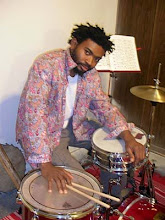
Tosin Aribisala started out in his formative years as an artiste at a local church in Lagos in 1987. Gradually, his dexterity grew and drew large followers before he relocated
to the United States of America (USA). While in U S, he honed his creative skills and added other instruments. Aside drum, he plays African percussions like conga, cowbell, shekere and woodblock.
Going down memory lane on how it all started before he travelled, Aribisala said he went through several hands, including his father before he started out on his own.
According to him, his father was a strong influence on his music. “Outside my father, the major influential person in my music career was a man named Kunle Pinmiloye, a great teacher and drummer. He is an instructor who has maintained a reputation among his fans and peers for over 20 years as one of the very finest musicians on the traditional jazz and contemporary Nigerian music scene today. He was the first person who taught me how to read and interpret musical notations and drum rudiments. Another good teacher of mine was a Paris-based drummer called Moktar Samba, who gave me some lessons whenever I met him in France some years ago. Moktar actually expantiated extensively on what Kunle taught me in Nigeria”, he informed.
“I started performing with a professional band in 1996. The Sunny Neji Band was led by Sunny Neji himself, who recently toured the U.S. Initially I was with the band for about two months and was fired because I was not disciplined enough in keeping to time, that I was always late for rehearsals and gigs and overplaying instead of keeping a steady flow of rhythm. It was quite disappointing, but fortunately for me they called me back a few weeks later. At that time I had learned a big lesson about being more professional and disciplined on a gig. However, I was only there for less than a year before another opportunity came my way.”
The experience, he said, changed his whole attitude to music, time management and professionalism. “By then I have become a better person for it. Although as I was growing up, I was influenced by the music of the church in Nigeria which takes its root in the traditional or folk music of the land. So it is impossible to separate the two. The main differences are the lyrics and the hymns. Thus, I absorbed everything equally: church music and secular music at the same time”, Aribisala said.
Pigeonholing Aribisala as a drummer would be far from the point. Aside playing the drums, he also produces music, writes songs and performs. A true musician, he said, should be able to write, read and or interpret music. “The first song I wrote is called Harvester, which was written 11 years ago. I still perform it live. Actually, I just started performing it with my band about a year ago, and it has been rearranged for both vocal and instrumental versions. I always update my songs with new arrangements. It is like painting; you sketch out what you want to paint and you keep going back to the board to add this and that line or colour. I learned that from a Ghanaian painter who worked for my father and so I applied that to my music. Besides, I have come across some composers’ works that have been rearranged by themselves. The funny thing is that the rearrangement always take me by surprise. And that just inspires me to rework some of my compositions, which sometimes gives birth to two versions of the same song. That way the band does not get bored of playing the same song over and over.”
He explained significance of the Hallelujazz Project within this framework. “Besides my native Yoruba language that some listeners may not understand, the instrumental aspect of the music is what brings about the connection or attraction for the general listeners. This is because the instrumentation of my music is not so traditionally African but a marriage of Africa and jazz, and some Latin vibes. As a matter of fact, I also write some songs in English language, which is a more universal language that everyone could understand. I observed that in this age where the world is gradually evolving into a global village, especially with modern technology, Internet, media power, intermingling of cultures and so on, it is not difficult for people around the world to understand or connect with different cultures, music or fashion around us. I was exposed to American music -jazz, country, soul and R&B at a very early age. The same thing with Jamaican reggae music and the Rasta Movement, and many other cultures while I was still in Nigeria years ago. So, I believe the same thing could be happening to someone else in another part of the world. That way we all can easily relate to the same type of music, outfit, food, religion and what have you, think, see and feel.this is what Hallelujazz Project is all about.”
On a final note, Aribisala describes his music as very original and pleasant to the ears. He says his newly released CD, Hallelujazz Project is rarity in jazz, gospel and contemporary. The drummer moved to the U.S. in 2001. Since his arrival, he has been involved in numerous musical projects, one of which was the “Red Hot & Riot” CD - a tribute to the legendary Nigerian musician, composer, multi-instrumentalist and pioneer of Afro beat music, the late Fela Anikulapo Kuti, who died in 1997.
Tapping from his vast experience, Aribisala has developed a wide range of drumming styles, which include fusion, reggae, R&B, hip-hop, afrobeat, gospel, juju and the traditional African drumming patterns associated with what he calls the Konkolo style. In addition to playing, writing and producing music, he is also a teacher of drumming art from which he derives a great deal of satisfaction.
Aribisala is the leader Hallelujazz Project, a band he put together in 2002. Some key members of the band are Cheikh Ndoye on Bass, Ben Bokor on Sax and vocalist Monica Ssali.
Tosin Aribisala started out in his formative years as an artiste at a local church in Lagos in 1987. Gradually, his dexterity grew and drew large followers before he relocated
to the United States of America (USA). While in U S, he honed his creative skills and added other instruments. Aside drum, he plays African percussions like conga, cowbell, shekere and woodblock.
Going down memory lane on how it all started before he travelled, Aribisala said he went through several hands, including his father before he started out on his own.
According to him, his father was a strong influence on his music. “Outside my father, the major influential person in my music career was a man named Kunle Pinmiloye, a great teacher and drummer. He is an instructor who has maintained a reputation among his fans and peers for over 20 years as one of the very finest musicians on the traditional jazz and contemporary Nigerian music scene today. He was the first person who taught me how to read and interpret musical notations and drum rudiments. Another good teacher of mine was a Paris-based drummer called Moktar Samba, who gave me some lessons whenever I met him in France some years ago. Moktar actually expantiated extensively on what Kunle taught me in Nigeria”, he informed.
“I started performing with a professional band in 1996. The Sunny Neji Band was led by Sunny Neji himself, who recently toured the U.S. Initially I was with the band for about two months and was fired because I was not disciplined enough in keeping to time, that I was always late for rehearsals and gigs and overplaying instead of keeping a steady flow of rhythm. It was quite disappointing, but fortunately for me they called me back a few weeks later. At that time I had learned a big lesson about being more professional and disciplined on a gig. However, I was only there for less than a year before another opportunity came my way.”
The experience, he said, changed his whole attitude to music, time management and professionalism. “By then I have become a better person for it. Although as I was growing up, I was influenced by the music of the church in Nigeria which takes its root in the traditional or folk music of the land. So it is impossible to separate the two. The main differences are the lyrics and the hymns. Thus, I absorbed everything equally: church music and secular music at the same time”, Aribisala said.
Pigeonholing Aribisala as a drummer would be far from the point. Aside playing the drums, he also produces music, writes songs and performs. A true musician, he said, should be able to write, read and or interpret music. “The first song I wrote is called Harvester, which was written 11 years ago. I still perform it live. Actually, I just started performing it with my band about a year ago, and it has been rearranged for both vocal and instrumental versions. I always update my songs with new arrangements. It is like painting; you sketch out what you want to paint and you keep going back to the board to add this and that line or colour. I learned that from a Ghanaian painter who worked for my father and so I applied that to my music. Besides, I have come across some composers’ works that have been rearranged by themselves. The funny thing is that the rearrangement always take me by surprise. And that just inspires me to rework some of my compositions, which sometimes gives birth to two versions of the same song. That way the band does not get bored of playing the same song over and over.”
He explained significance of the Hallelujazz Project within this framework. “Besides my native Yoruba language that some listeners may not understand, the instrumental aspect of the music is what brings about the connection or attraction for the general listeners. This is because the instrumentation of my music is not so traditionally African but a marriage of Africa and jazz, and some Latin vibes. As a matter of fact, I also write some songs in English language, which is a more universal language that everyone could understand. I observed that in this age where the world is gradually evolving into a global village, especially with modern technology, Internet, media power, intermingling of cultures and so on, it is not difficult for people around the world to understand or connect with different cultures, music or fashion around us. I was exposed to American music -jazz, country, soul and R&B at a very early age. The same thing with Jamaican reggae music and the Rasta Movement, and many other cultures while I was still in Nigeria years ago. So, I believe the same thing could be happening to someone else in another part of the world. That way we all can easily relate to the same type of music, outfit, food, religion and what have you, think, see and feel.this is what Hallelujazz Project is all about.”
On a final note, Aribisala describes his music as very original and pleasant to the ears. He says his newly released CD, Hallelujazz Project is rarity in jazz, gospel and contemporary. The drummer moved to the U.S. in 2001. Since his arrival, he has been involved in numerous musical projects, one of which was the “Red Hot & Riot” CD - a tribute to the legendary Nigerian musician, composer, multi-instrumentalist and pioneer of Afro beat music, the late Fela Anikulapo Kuti, who died in 1997.
Tapping from his vast experience, Aribisala has developed a wide range of drumming styles, which include fusion, reggae, R&B, hip-hop, afrobeat, gospel, juju and the traditional African drumming patterns associated with what he calls the Konkolo style. In addition to playing, writing and producing music, he is also a teacher of drumming art from which he derives a great deal of satisfaction.
Aribisala is the leader Hallelujazz Project, a band he put together in 2002. Some key members of the band are Cheikh Ndoye on Bass, Ben Bokor on Sax and vocalist Monica Ssali.
Fashola'a 800 days in office provides 156,779 jobs
STORIES BY DAYO ADEJOBI
Fashola Marks 800 Days In Office, Pledges To Provide Platform For Youths To Unleash Potentials.
Lagos State Governor, Mr Babatunde Fashola (SAN) on Thursday,6th August 2009 marked his 800th day in the saddle of leadership, affirming that the responsibility of his administration and the present generation is simply to provide the platform and environment that will unleash the power and potential of the Lagos and Nigerian Youth.Governor Fashola who spoke at the Governor’s Forum with the theme: “Repositioning the Youth for Future Challenges” held at the Blue Roof, Lagos Television, Agidingbi as part of activities marking the event. He however added the country’s problems can be solved by the Youth.Said he: “ We have become the continental leaders in many fields like sports, music, fashion and business to mention a few and that convinces me that we can be leaders in all fields”.“What has kept us back is that we have been engaged for too long in fighting for the survival of our country and development has not taken place at the necessary pace to match the growth in population”, he added.He explained that while the state had a population of only about 5 million people in the 1970’s, it has exceeded 18 million in 2009 with a whooping growth of about 260 percent. He lamented that in those almost thirty years, water supply has not grown in that size and neither have new roads been constructed at the same pace.Governor Fashola added that this has led to the situation where the growing population has struggled to share the existing assets of roads, hospitals, schools, power, water, markets, entertainment centres, sports facilities and much more. “This is why life seems difficult, this is why new jobs are not emerging, this is a 30 year deficit which we are determined to reverse and this is why you must understand why we do what we do”. He eulogized.“We are building at an aggressive pace to provide more roads and create choices to ease traffic congestion; we are rebuilding and repairing classrooms and schools, new hospitals, new stadia, water works as well as markets to expand opportunities for as many of you as we can. We are clearing canals and drainages that in some cases have not been attended to in 15 years or more”.Governor Fashola added that in doing this, the administration is using people and in the process creating jobs for builders, for suppliers of building materials, food for workers, jobs for accountants, engineers, transporters and so much more to keep the economy going, thus keeping parents at work so that they can support the children.The Governor said in the last 100 days after the 700 day, the administration has been very busy in diverse sections of the economy such as transportation where 1,255 new taxis have been added to the growing fleet in Lagos.In the area of education, Governor Fashola reported that, the State successfully convened an education summit whose recommendation it is in the process of implementing, just as the State House of Assembly has been active in passing the Vocation and Technical Education Institutions Law to help accelerate the development of Technical and Vocational Education.The Lagos State Governor also listed the Model City Law which will help stem the incidence of illegal constructions that usually end up collapsing and causing deaths and the Lagos Court of Arbitration and Magistrates Court Law which would help enhance the quality of justice delivery to all as some of the accomplishments in the last 100 days.“One of the many innovative features of the Magistrate’s Court Law is that for the first time in Nigeria, Magistrates will now sit on Saturdays and in the hope that this will end the practice where people are kept in remand over the weekend simply because Courts are not in operation”, he added.Specifically as it relates to the young people, Governor Fashola added: “We have decided to do more this year and in the years to come, by focusing more directly on those things that affect you directly, even as we deal with those things that affect your parents and guardians and from which you indirectly benefit”.He explained that in the last 100 days, the administration undertook its second quarter budget review which not only recorded a 68 percent performance but has led to the creation of 156,779 jobs in 2009 alone.In his words: “We have been busy with sports through the hosting of the Federations Cup in which many of you turned out in large numbers and we have delivered another park and sporting facility at kernel Street in Surulere while we are almost completing the sports facilities in Agege and Campos Square”“We have provided 500 vacation job opportunities again this year for students on vacation within the public service to keep you busy, mentor you and provide some extra cash and pocket money to enable you address those needs that young persons have.We have aggressively through the law enforcement agents tried to protect you from those who try to corrupt you by arresting and prosecuting those who have taken advantage of your innocence to display pornographic material”, he added.He reiterated that in the last 100 days, the State has also received several accolades locally and internationally such as award as the cleanest capital in the Federation by the Federal Ministry of Environment, Award for Good Governance at 2009 African Business Awards in London and the award of transport Planner of the Year 2009 by the Transport Planning Society of United Kingdom.On the on-going ASUU strike, Governor Fashola described it as a manifestation of the imperfect Federation which neglects or fails to recognize the autonomy of states as Federating units who should be competent to take decisions in their areas of constitutional authority without any adverse consequence from decisions taken by the Federal Government.“If states own and run universities like the Federal Government as the Constitution allows, why should a disagreement between employees of the Federal Government in a Federal University paralyze the activities in all State Universities where there is no labour dispute”?. Fashola Questioned.“Why should every university lecturer whether employed by the State or Federal University earn the same wage?. What happened to the principles of competitive advantage in economics?. Can we and must we continue to fund tertiary education in the way we currently do and still attract the best lecturers or should we develop a process of guaranteed scholarships for indigent students while those who can afford to do so pay a fair fee in order to guarantee autonomy to universities and to provide funding for them”, Governor Fashola wondered.He asked rhetorically: “How does the frequency of strikes in our educational system and the uncertain academic calendar affect proper planning and what are its impacts on the job creation capacities of the public and the private sectors”.
According to Governor Fashola, it could be quite difficult for employment to be guaranteed for people if we do not know how many we are, asking: “How successful can a budget based on wrong population assumptions be”.He charged that this is probably the time to re-define the concept of jobs from job seekers to aspiring entrepreneurs, asking, “in an economy where growth is not assured on a sustainable basis should young graduates continue to look for employment or begin to think about being self employed?. Are our School Curriculum limiting job opportunities by producing graduates that the economy needs?The Forum was attended by the Deputy Governor, Princess Sarah Adebisi Sosan, members of the State Executive Council, pupils and students representing various schools, institutions, voluntary organizations and youth bodies including political parties.
Fashola Marks 800 Days In Office, Pledges To Provide Platform For Youths To Unleash Potentials.
Lagos State Governor, Mr Babatunde Fashola (SAN) on Thursday,6th August 2009 marked his 800th day in the saddle of leadership, affirming that the responsibility of his administration and the present generation is simply to provide the platform and environment that will unleash the power and potential of the Lagos and Nigerian Youth.Governor Fashola who spoke at the Governor’s Forum with the theme: “Repositioning the Youth for Future Challenges” held at the Blue Roof, Lagos Television, Agidingbi as part of activities marking the event. He however added the country’s problems can be solved by the Youth.Said he: “ We have become the continental leaders in many fields like sports, music, fashion and business to mention a few and that convinces me that we can be leaders in all fields”.“What has kept us back is that we have been engaged for too long in fighting for the survival of our country and development has not taken place at the necessary pace to match the growth in population”, he added.He explained that while the state had a population of only about 5 million people in the 1970’s, it has exceeded 18 million in 2009 with a whooping growth of about 260 percent. He lamented that in those almost thirty years, water supply has not grown in that size and neither have new roads been constructed at the same pace.Governor Fashola added that this has led to the situation where the growing population has struggled to share the existing assets of roads, hospitals, schools, power, water, markets, entertainment centres, sports facilities and much more. “This is why life seems difficult, this is why new jobs are not emerging, this is a 30 year deficit which we are determined to reverse and this is why you must understand why we do what we do”. He eulogized.“We are building at an aggressive pace to provide more roads and create choices to ease traffic congestion; we are rebuilding and repairing classrooms and schools, new hospitals, new stadia, water works as well as markets to expand opportunities for as many of you as we can. We are clearing canals and drainages that in some cases have not been attended to in 15 years or more”.Governor Fashola added that in doing this, the administration is using people and in the process creating jobs for builders, for suppliers of building materials, food for workers, jobs for accountants, engineers, transporters and so much more to keep the economy going, thus keeping parents at work so that they can support the children.The Governor said in the last 100 days after the 700 day, the administration has been very busy in diverse sections of the economy such as transportation where 1,255 new taxis have been added to the growing fleet in Lagos.In the area of education, Governor Fashola reported that, the State successfully convened an education summit whose recommendation it is in the process of implementing, just as the State House of Assembly has been active in passing the Vocation and Technical Education Institutions Law to help accelerate the development of Technical and Vocational Education.The Lagos State Governor also listed the Model City Law which will help stem the incidence of illegal constructions that usually end up collapsing and causing deaths and the Lagos Court of Arbitration and Magistrates Court Law which would help enhance the quality of justice delivery to all as some of the accomplishments in the last 100 days.“One of the many innovative features of the Magistrate’s Court Law is that for the first time in Nigeria, Magistrates will now sit on Saturdays and in the hope that this will end the practice where people are kept in remand over the weekend simply because Courts are not in operation”, he added.Specifically as it relates to the young people, Governor Fashola added: “We have decided to do more this year and in the years to come, by focusing more directly on those things that affect you directly, even as we deal with those things that affect your parents and guardians and from which you indirectly benefit”.He explained that in the last 100 days, the administration undertook its second quarter budget review which not only recorded a 68 percent performance but has led to the creation of 156,779 jobs in 2009 alone.In his words: “We have been busy with sports through the hosting of the Federations Cup in which many of you turned out in large numbers and we have delivered another park and sporting facility at kernel Street in Surulere while we are almost completing the sports facilities in Agege and Campos Square”“We have provided 500 vacation job opportunities again this year for students on vacation within the public service to keep you busy, mentor you and provide some extra cash and pocket money to enable you address those needs that young persons have.We have aggressively through the law enforcement agents tried to protect you from those who try to corrupt you by arresting and prosecuting those who have taken advantage of your innocence to display pornographic material”, he added.He reiterated that in the last 100 days, the State has also received several accolades locally and internationally such as award as the cleanest capital in the Federation by the Federal Ministry of Environment, Award for Good Governance at 2009 African Business Awards in London and the award of transport Planner of the Year 2009 by the Transport Planning Society of United Kingdom.On the on-going ASUU strike, Governor Fashola described it as a manifestation of the imperfect Federation which neglects or fails to recognize the autonomy of states as Federating units who should be competent to take decisions in their areas of constitutional authority without any adverse consequence from decisions taken by the Federal Government.“If states own and run universities like the Federal Government as the Constitution allows, why should a disagreement between employees of the Federal Government in a Federal University paralyze the activities in all State Universities where there is no labour dispute”?. Fashola Questioned.“Why should every university lecturer whether employed by the State or Federal University earn the same wage?. What happened to the principles of competitive advantage in economics?. Can we and must we continue to fund tertiary education in the way we currently do and still attract the best lecturers or should we develop a process of guaranteed scholarships for indigent students while those who can afford to do so pay a fair fee in order to guarantee autonomy to universities and to provide funding for them”, Governor Fashola wondered.He asked rhetorically: “How does the frequency of strikes in our educational system and the uncertain academic calendar affect proper planning and what are its impacts on the job creation capacities of the public and the private sectors”.
According to Governor Fashola, it could be quite difficult for employment to be guaranteed for people if we do not know how many we are, asking: “How successful can a budget based on wrong population assumptions be”.He charged that this is probably the time to re-define the concept of jobs from job seekers to aspiring entrepreneurs, asking, “in an economy where growth is not assured on a sustainable basis should young graduates continue to look for employment or begin to think about being self employed?. Are our School Curriculum limiting job opportunities by producing graduates that the economy needs?The Forum was attended by the Deputy Governor, Princess Sarah Adebisi Sosan, members of the State Executive Council, pupils and students representing various schools, institutions, voluntary organizations and youth bodies including political parties.
Thursday, August 6, 2009
Oyemakinde Babajide’s ‘Who Says Lawyers are Liars’ Debuts.
These were the words of Lagos based legal luminary, Babajide Oyemakinde who yesterday publicly presented his book titled ‘‘Who Says Lawyers are Liars’’. This is my contribution to non formal legal knowledge, thus further bridging the gap between the ‘learned and unlearned,’ after all , Lawyers see others see others as ‘unlearned’, and the unlearned see the ‘learned’ as Liars. The idea behind writing the book is to foster formal education and erase the negative perception of the ordinary man, that the Lawyer is a Liar.
‘‘I have made it so easily comprehensible for the common man to digest. No cases and statutes’’. He eulogized.
The Reviewer Speaking on the Book, Barrister Jadesola Amedari described Oyemakinde’s approach and writing style as a very unique method. Oyemakinde has made the process of learning Law simple and fun, to broaden the horizon of the common reader concerning the various issues discussed. One unique feature of this work ,is that each of the twenty-two chapters informs, educates and indeed entertains the reader.
Amedari, however said the book ‘Who Says Lawyers are Liars’ is a unique and interesting publication which has taken the knowledge of law and other related life issues from the four walls of the lecture halls of universities and Law Schools and theories of the various business Schools. It has transferred the knowledge of the few to ‘all’ and has indeed proved a point that Lawyers are not Liars.
In the remarks of the Chairman of the Occasion, he described Babajide as a Man of God endowed with power and knowledge. He further charged this present generation to handle Nigeria well such that it will live up its current rebranding Campaign ‘’Good Nation Good People’’.
Oyemakinde commenting on his 36th, says he feels particularly grateful to God for keeping him alive, attaining maturity and also equipping him to positively impact the society.
The epoch making event which doubled as Babajide’s 36th birthday, was held on Tuesday 4th August, 2009, at the Paul Dike Hall, Nigerian Air Force Camp Headquarters, Ikoyi Lagos.
‘‘I have made it so easily comprehensible for the common man to digest. No cases and statutes’’. He eulogized.
The Reviewer Speaking on the Book, Barrister Jadesola Amedari described Oyemakinde’s approach and writing style as a very unique method. Oyemakinde has made the process of learning Law simple and fun, to broaden the horizon of the common reader concerning the various issues discussed. One unique feature of this work ,is that each of the twenty-two chapters informs, educates and indeed entertains the reader.
Amedari, however said the book ‘Who Says Lawyers are Liars’ is a unique and interesting publication which has taken the knowledge of law and other related life issues from the four walls of the lecture halls of universities and Law Schools and theories of the various business Schools. It has transferred the knowledge of the few to ‘all’ and has indeed proved a point that Lawyers are not Liars.
In the remarks of the Chairman of the Occasion, he described Babajide as a Man of God endowed with power and knowledge. He further charged this present generation to handle Nigeria well such that it will live up its current rebranding Campaign ‘’Good Nation Good People’’.
Oyemakinde commenting on his 36th, says he feels particularly grateful to God for keeping him alive, attaining maturity and also equipping him to positively impact the society.
The epoch making event which doubled as Babajide’s 36th birthday, was held on Tuesday 4th August, 2009, at the Paul Dike Hall, Nigerian Air Force Camp Headquarters, Ikoyi Lagos.
Subscribe to:
Posts (Atom)